



ISO 9001 : 2015 Quality Management System
ISO 9001 is defined as the international standard that specifies requirements for a quality management system (QMS). Organizations use the standard to demonstrate the ability to consistently provide products and services that meet customer and regulatory requirements

SMK3 Occupational Health and Safety Management System
According to the Government Regulation of the Republic of Indonesia Number 50 of 2012, the Occupational Health and Safety Management System (SMK3) is part of the overall company management system aimed at controlling risks related to work activities in order to create a safe, efficient, and productive workplace.

Halal certification for tissue products
Halal certification is a document that guarantees that the products consumed or produced by manufacturers meet halal standards issued by the Halal Product Assurance Agency (BPJPH). Halal certification is beneficial for increasing consumer trust, especially among Muslim consumers.

ISO 14001 : 2015 Occupational Health and Safety Management System
ISO 14001 is an internationally agreed standard that sets out the requirements for an environmental management system. It helps organizations improve their environmental performance through more efficient use of resources and reduction of waste, gaining a competitive advantage and the trust of stakeholders.

COC (Chain Of Custody) PEFC Programme for the Endorsement of Forest Certification
Chain of Custody (CoC) Programme for the Endorsement of Forest Certification (PEFC) is an international certification program for forest product traceability. PEFC recognizes national and international regulations for forest products in the supply chain, ensuring traceability back to sustainably certified forests under national forest management standards endorsed by PEFC.

SNI 173-2022 untuk kertas tisu wajah SNI 0103-2022 untuk kertas tisu toilet
SNI (Indonesian National Standard) is a standard established by the National Standardization Agency (BSN) to ensure the quality and safety of products distributed in Indonesia. SNI is a mandatory standard, and therefore, compliance is required.

Properda Blue Rating
Properda is the Environmental Performance Rating Program for Activities, which is a program assessing environmental management performance at the provincial level. This program aims to encourage companies to comply with regulations on environmental management and conservation.
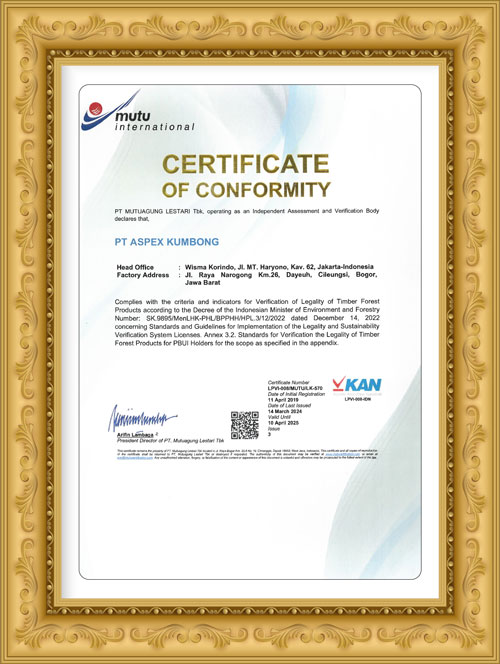
SVLK Wood Verification and Legality System
SVLK or Timber Legality and Sustainability Assurance Program is a mandatory national certification system for timber legality & sustainability in Indonesia, to ensure timber products and raw materials obtained or derived from sources that its origins and management meet the legal aspects.